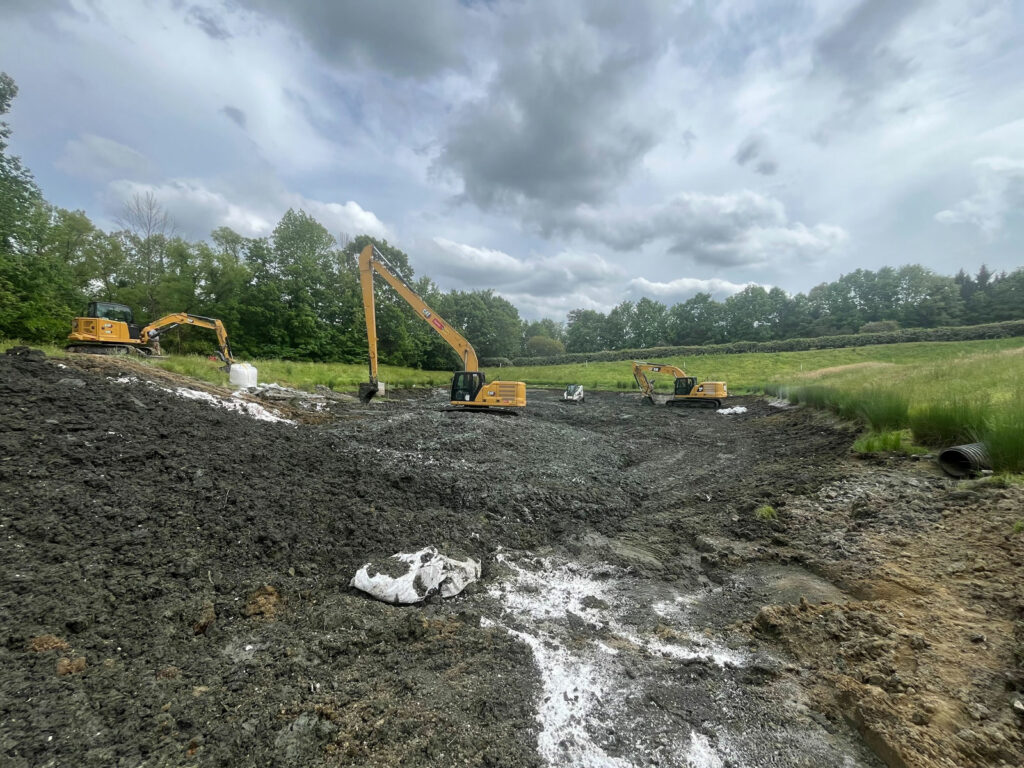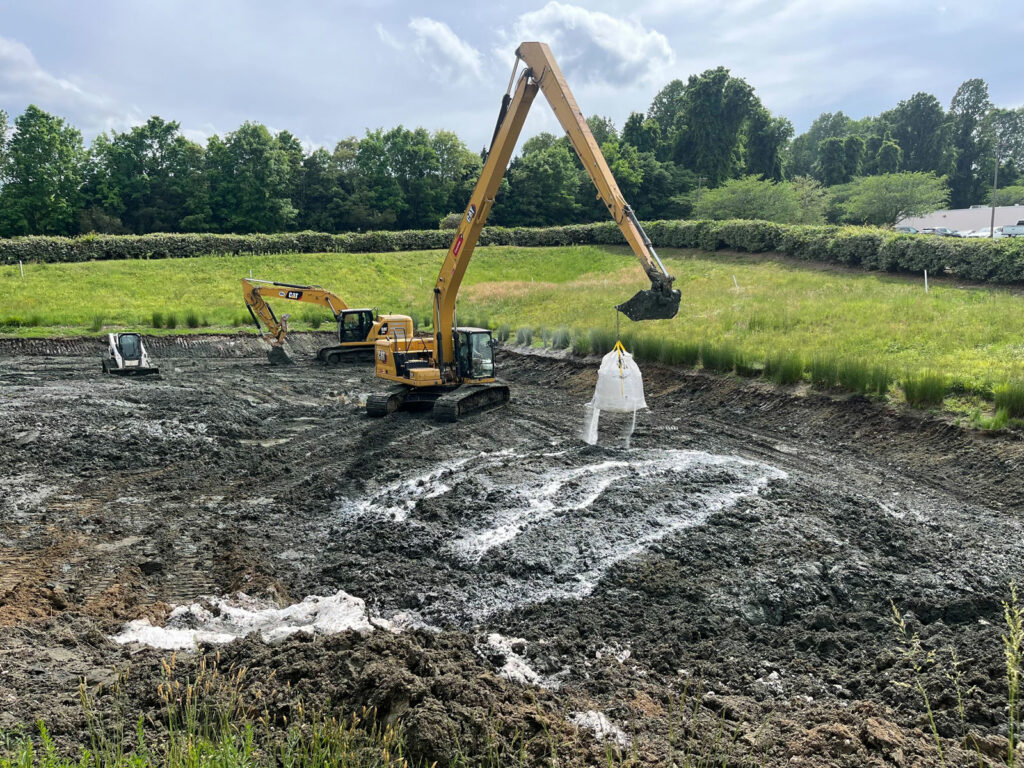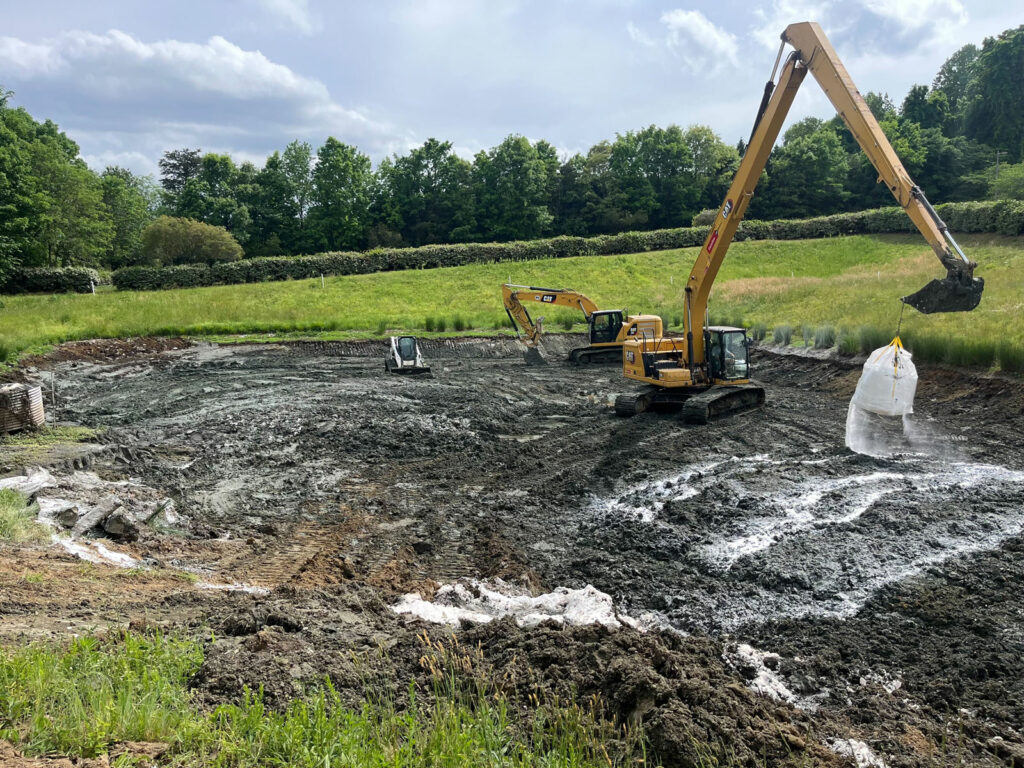
Retaining ponds play a crucial role in managing stormwater runoff, preventing flooding, and maintaining ecological balance. However, over time, these ponds can accumulate sediment, sludge, and pollutants, leading to reduced capacity and compromised water quality.
Challenges:
- Accumulated Debris: Retention ponds often accumulate sediment, sludge, and various pollutants, diminishing their effectiveness and increasing the risk of flooding.
- Labor-Intensive Cleaning: Traditional methods of retention pond cleanout involve costly and labor-intensive processes, often requiring heavy machinery and disrupting surrounding ecosystems.
- Environmental Impact: Conventional cleanup methods can disturb aquatic habitats and release contaminants into nearby waterways, posing environmental risks.
Why You Need Help:
- Efficiency: Cleaning out retention ponds using conventional methods can be time-consuming and costly. Super absorbent polymers offer a more efficient solution, reducing cleanup time and minimizing disruption to surrounding areas.
- Environmental Protection: By utilizing super absorbent polymers, you can minimize the environmental impact of retention pond cleanouts. These polymers encapsulate contaminants, preventing their release into the environment and promoting safer disposal.
- Enhanced Water Quality: Super absorbent polymers effectively bind with sediment and pollutants, improving water quality and restoring the functionality of retention ponds for effective stormwater management.
Benefits:
- Cost-Effective: Super absorbent polymers offer a cost-effective alternative to traditional retention pond cleanout methods, reducing labor and equipment expenses.
- Environmentally Friendly: By minimizing disturbance to surrounding ecosystems and preventing the release of contaminants, super absorbent polymer-based cleanouts are environmentally friendly.
- Improved Water Management: Clean retention ponds are essential for effective stormwater management. Utilizing super absorbent polymers ensures the efficient removal of sediment and pollutants, enhancing the overall functionality of the pond and reducing the risk of flooding.